Public Debt Explained Simply and Its Impact on Your Wallet
Public debt is like a giant bill the government has to pay. But who really pays? And why does it end up weighing on your personal budget? We untangle truth from fiction.
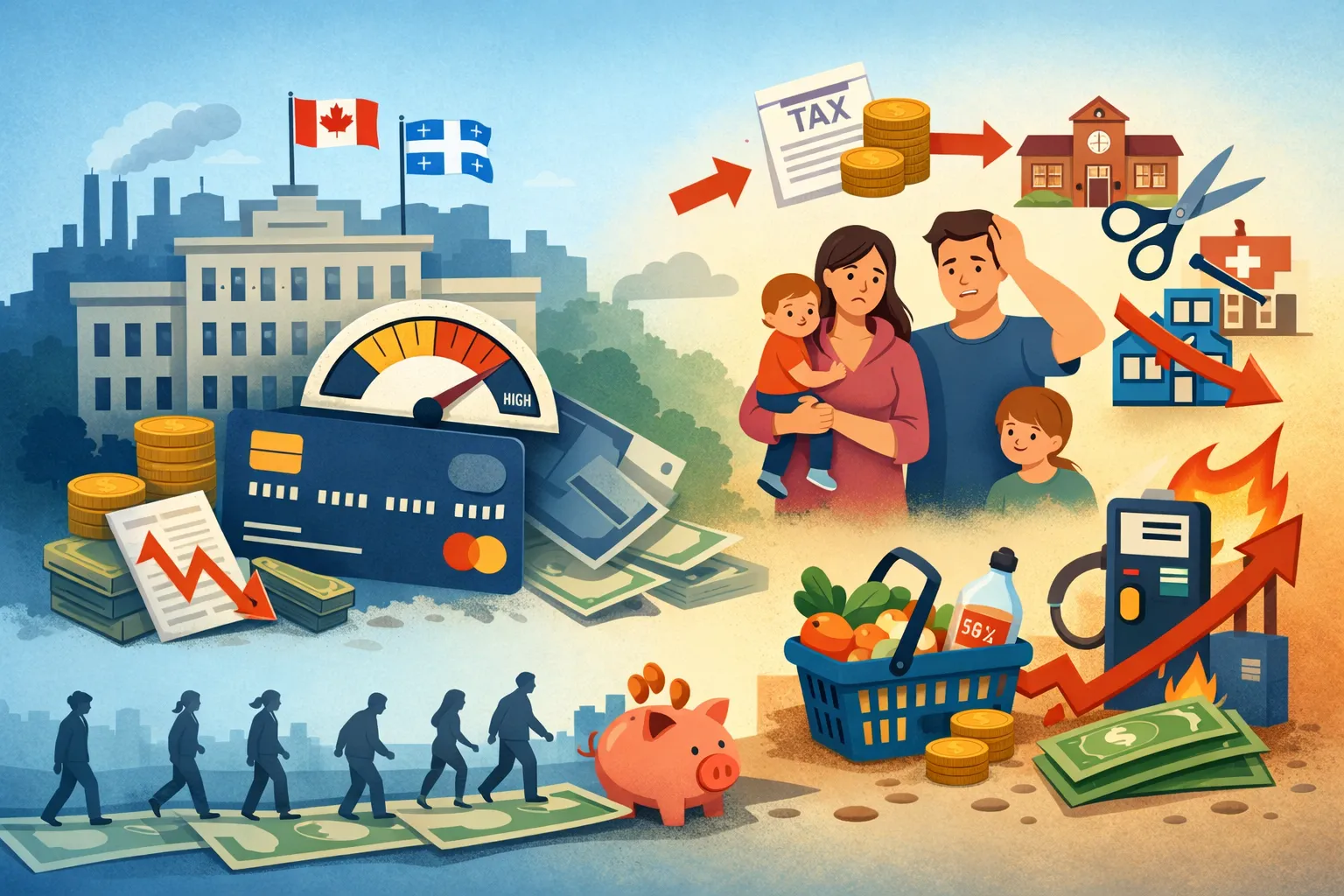
You often hear about public debt on TV or in the news. Astronomical numbers, political debates, promises of reduction. But deep down, you wonder: does it really concern me? The answer is yes, and more than you think. Because this debt isn't just an accountant problem in Quebec or Ottawa — it's an invisible pressure that trickles down to your salary, your taxes, and your purchasing power. Let's see how it works, without jargon, and why you should care.
What is public debt?
Imagine the government, like you, has a budget. It spends on roads, hospitals, schools. But sometimes, it spends more than it earns in taxes. So it borrows. That's public debt: the money the government must repay to those who lent it — often banks, investors, or even other countries. It's not a bad thing in itself, but when it spirals, it creates waves.
Debt is like a giant credit card: you pay interest every month. For the government, that interest is money that doesn't go into public services.
When debt increases, creditors can demand higher interest rates, which increases the bill for everyone.
In Quebec and Canada, public debt represents thousands of dollars per person — a sum that, indirectly, you help repay.
Debt is a promise the government makes today, but your children might have to honor tomorrow.
How it affects your wallet
You might think it's far from you, but public debt has concrete impacts on your daily life. First, to repay, the government has two main options: raise taxes or cut spending. Both affect you directly.
Tax increases: more GST, income tax, property taxes. Your net salary shrinks, and everything costs more.
Service cuts: less money for schools, roads, healthcare. You might pay less tax, but you have to compensate privately — for example, with higher daycare fees.
Next, high debt can lead to inflation. If the government prints more money to pay its debts, the value of money drops. Translation: your purchasing power erodes, and groceries get more expensive without your salary keeping up. It's a vicious cycle that weighs on ordinary households.
Myths to debunk
You often hear simplistic claims about debt. For example: "it's not a big deal, we can always borrow more." In reality, that hides risks. Another myth: "only the rich pay." False — taxes and inflation affect everyone, especially the middle and lower classes.
Myth: debt stimulates the economy. True in the short term, but long-term, it can stifle growth by draining resources.
Myth: it's a problem for future generations only. In fact, you're already living it through price hikes and reduced services.
Understanding debt means understanding why your money seems to disappear faster.
What can you do on your scale?
You can't control public debt directly, but you can act on your own budget. First step: be aware of the impact. When you see a tax hike, remember it might be linked to debt management. Second step: plan accordingly — for example, by saving more to compensate for inflation.
Follow local economic news: decisions in Quebec and Ottawa affect your pocket.
Diversify your investments: faced with inflation, some investments can hold up better.
Speak up: by voting or discussing, you influence public spending priorities.
It's not a magic solution, but it's a start to regain some control over your financial situation.
Why it's important to talk about it
Public debt is often presented as a complex topic reserved for experts. But in reality, it's an everyday matter. By talking about it simply, we break the taboo and allow more people to understand the issues. It can lead to more informed choices, both personally and collectively.
Transparency helps avoid bad surprises, like sudden tax hikes.
An informed population can exert pressure for more responsible debt management.
Ultimately, public debt isn't just a number on a balance sheet. It's a reality that weighs on your daily life, from groceries to salary to public services. By understanding it better, you can anticipate the impacts and adjust your finances accordingly. Because in Quebec, every dollar counts — and knowing where it goes is already a step toward more autonomy.